What Is a Baby Sleep Sack?
A baby sleep sack, also called a sleep bag or wearable blanket, is exactly what it sounds like: a blanket you zip your baby into instead of tucking loose bedding around them in the crib. Sleep sacks are recommended by health experts as an alternative to loose blankets in the crib, since a properly fitted wearable blanket stays in place during sleep. Available in different TOG ratings, sleep bags also allow parents to choose an appropriate level of warmth based on their baby's sleep environment. For more on what makes a wearable blanket safe for sleep, see our guide on whether sleep sacks are safe for babies.
Sleep sacks have only been popularized in the United States in the last twenty years, but this European sleep sack tradition goes back much further.
The History of Baby Sleep Bags
Baby sleep bags have been used for decades as a wearable alternative to traditional blankets. Over time, they have become a popular choice for families looking for a practical way to keep babies comfortable without loose bedding in the crib. Today, wearable blankets are recommended by the American Academy of Pediatrics as an alternative to loose blankets in an infant's sleep space.
Sleep Sacks vs. Swaddling
Swaddling has been practiced for centuries across many cultures as a way to help babies feel snug and settled. Today, we know there can be drawbacks: swaddling too tightly around a baby's hips and legs can increase the risk of developmental hip dysplasia. Swaddling should also stop as soon as a baby shows signs of attempting to roll over, in accordance with American Academy of Pediatrics recommendations. A non-swaddling sleep bag, by contrast, allows babies to move their arms, hips, and legs freely while providing a wearable alternative to loose blankets.
For newborns who aren't yet showing signs of attempting to roll, Kyte Baby offers two convenient swaddling options. Our Swaddle Bag features a simple zippered design that keeps baby's arms comfortably positioned across the chest without traditional wrapping or tucking. The Sleep Bag Swaddler offers a versatile two-in-one sleep system that transitions from a newborn swaddle to a traditional sleep bag. Once your baby shows signs of attempting to roll, simply remove the swaddle component and continue using the sleep bag on its own, provided it still fits properly. For more guidance on choosing the right size, see our guide on how a Kyte Baby sleep bag should fit.
The Benefits of a Sleep Sack
Kyte Baby sleep bags are designed with comfort and ease of use in mind. A curved, dual-zipper design makes them easy to put on and simple for nighttime diaper changes. The roomy, closed bag allows babies to move their hips and legs naturally, while the generous fit through the body provides comfort without restricting movement.
Sleeveless or Long Sleeve?
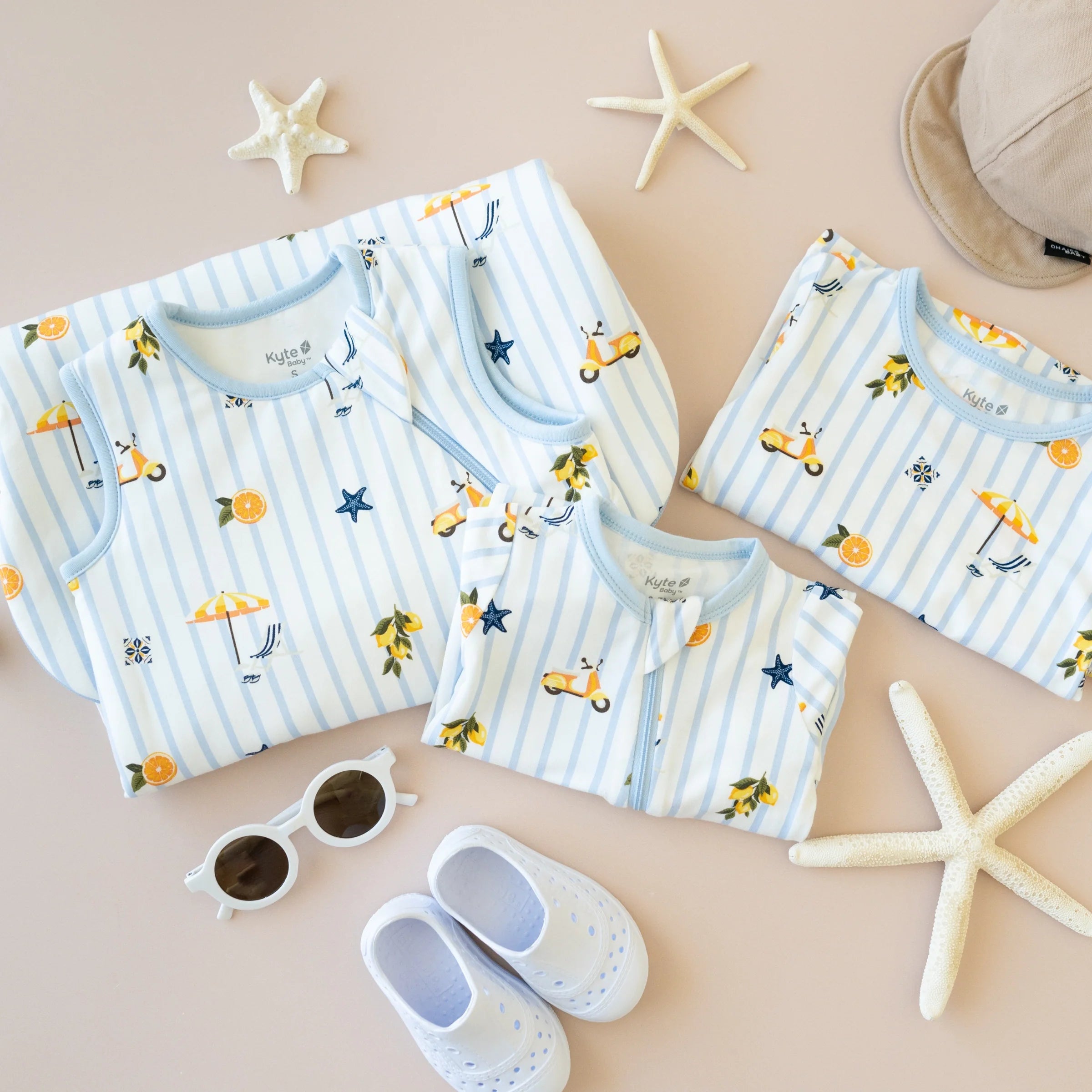
Most Kyte Baby sleep bags are sleeveless for a breathable, comfortable fit, with plenty of room for little arms to move freely. For cooler rooms, or babies who prefer more coverage, the Slumber Bag offers a long-sleeve option available in 1.0 TOG. Kyte Baby's sleep bags feature our signature rayon made from bamboo fabric, known for its silky-soft feel against delicate skin. For a full comparison of the different sleep sack styles Kyte Baby offers, see our guide to choosing a sleep sack.
Choosing the Right TOG for Your Nursery
Kyte Baby offers a range of sizes and TOG ratings to suit different sleep environments. TOG stands for Thermal Overall Grade and measures a fabric's thermal resistance, helping parents choose an appropriate level of warmth based on their nursery's temperature. Our 0.5 TOG sleep bag is designed for warmer rooms, with two layers of silky-soft rayon made from bamboo and no filling. The 1.0 TOG sleep bag offers a versatile option for year-round use, while our 2.5 TOG sleep bag provides more insulation for cooler rooms. The appropriate TOG also depends on your baby's clothing layers and individual needs. For more guidance on choosing the right TOG and clothing layers for your baby, see our complete guide on how to dress baby for sleep.
Here's how Kyte Baby's three TOG weights match up:
| TOG Rating | Ideal Room Temperature | Best For |
| 0.5 TOG | 74-78°F | Summer, warm rooms, layering over just a diaper or short-sleeve pajamas |
| 1.0 TOG | 69-73°F | All-year comfort, layering over short or long-sleeve pajamas |
| 2.5 TOG | 61-68°F | Colder seasons, rooms with stronger A/C, layering over footed pajamas |
What About Tummy Sleepers?
The American Academy of Pediatrics recommends always placing babies on their backs for every sleep until 1 year of age. Once a baby can independently roll from back to stomach and stomach to back, they can generally remain in the position they choose during sleep. A properly fitted, non-weighted sleep bag allows babies to move freely while providing an alternative to loose blankets in the crib.
The Kyte Baby Difference
We take sleep safety seriously at Kyte Baby. Our aim is to provide comfortable sleep for babies and ease of use for parents, night after night.
Ready to find the right sleep bag for your family? Shop the full sleep sack collection, or explore our Sleep Bag Swaddler for newborns who aren't yet showing signs of attempting to roll, or a Sleep Bag Walker once your little one is on the move.